

The real problem
Most companies accept that incidents happen and assume the cost is part of operating production. That is not the problem.
The problem is the premium you pay when readiness is weak. You pay extra time, extra chaos, extra risk, and extra recurrence, because authority and process collapse exactly when pressure peaks.
Readiness is the organization's ability to act coherently when the business is already compromised.
Signals you might recognize
- The first hour is negotiation. People debate severity, rollback, isolation, and comms instead of executing.
- Escalation depends on personal networks. The right people are paged late, or not at all.
- No one can stop the bleeding. Nobody is clearly authorized to take the hard action.
- Business pressure pushes unsafe change. Fixes are rushed because the system must be back now.
- Bureaucracy blocks the right fixes. Approvals and access are slow, but risky changes still slip through.
- Communications drift. Engineering, security, legal, and leadership tell different stories under stress.
- Post mortems are cosmetic. They exist as documents, not as operating change.
- The same incident returns. Different day, same failure mode, higher scrutiny.
If this feels familiar, your tools might be fine. Your operating posture is not.
How readiness fails
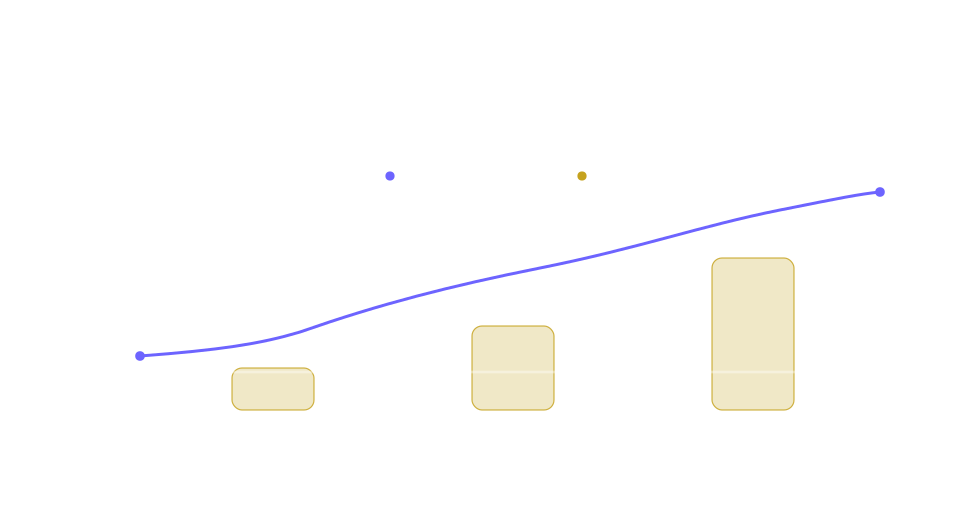
Readiness failures are predictable because incidents compress reality. Time collapses, information is incomplete, teams disagree, and delivery pressure keeps pushing change into the blast radius.
When authority is unclear, response becomes negotiation. When escalation is informal, severity becomes political. When evidence is not pre-assembled, defensibility is rebuilt after the fact, and the organization pays in scrutiny cost.
The minimum posture that holds in production
You do not need a perfect program. You need a posture that survives pressure. The minimum posture is not a tool list. It is the lines that must exist in writing, be reachable during impact, and be practiced.
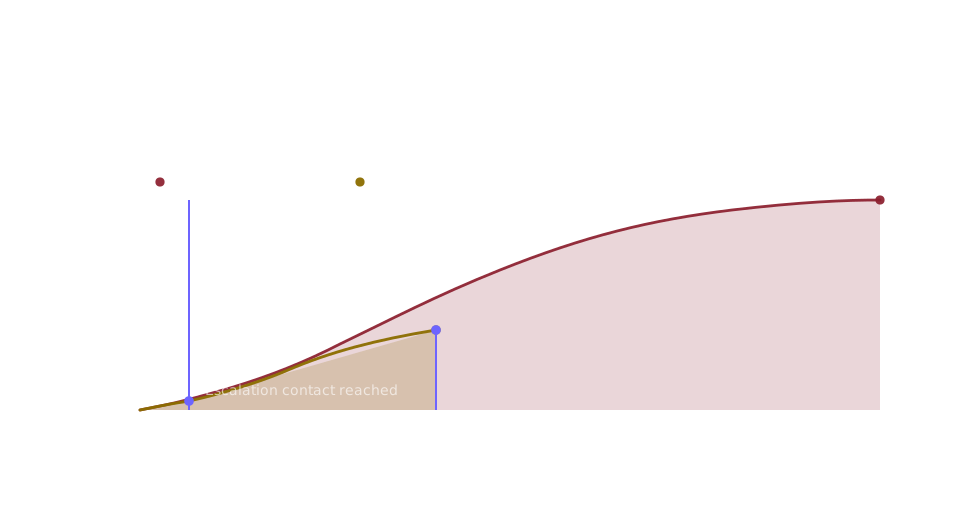
- Authority line. A named accountable owner with override rights during impact, plus coverage and conflict resolution.
- Escalation contract. Objective triggers, paging rules, severity thresholds, and who can authorize what at each level.
- Response flow. A practiced sequence for triage, containment, recovery, customer impact, communications, and post incident actions.
- Fix guardrails. A mechanism that blocks unsafe change under pressure and accelerates safe change with controlled paths.
- Evidence posture. The ability to produce, without reconstruction, a timeline, actions, decisions, approvals, rationale, and comms.
- Learning cadence. Owners, deadlines, and a review rhythm that forces actions to stick.
If any of these lines exist only in someone's head, they will not exist when the system is burning.
Fix guardrails
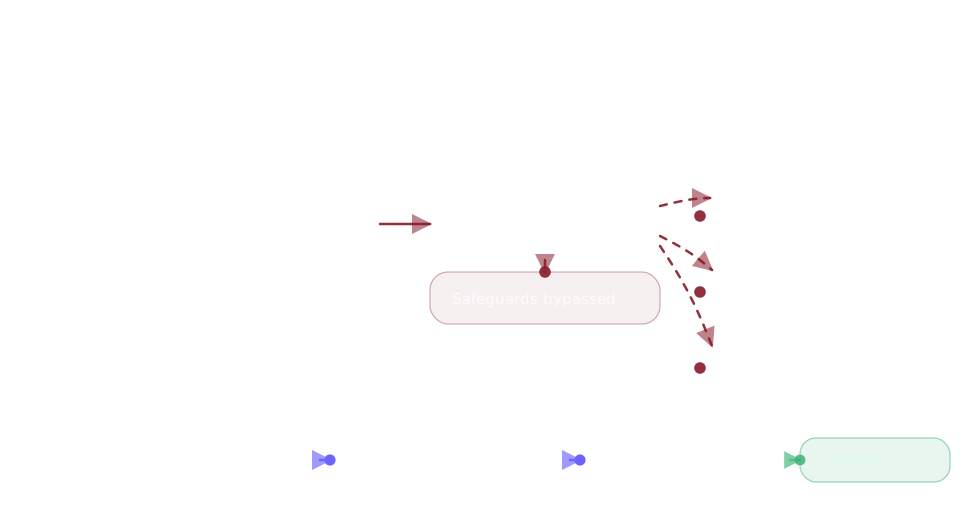
Delivery pressure keeps pushing change into the blast radius. Without disciplined containment, owner coordination, and guarded change, you trade one outage for follow-on degradation, recurring incidents, and avoidable risk.
What this turns into after impact
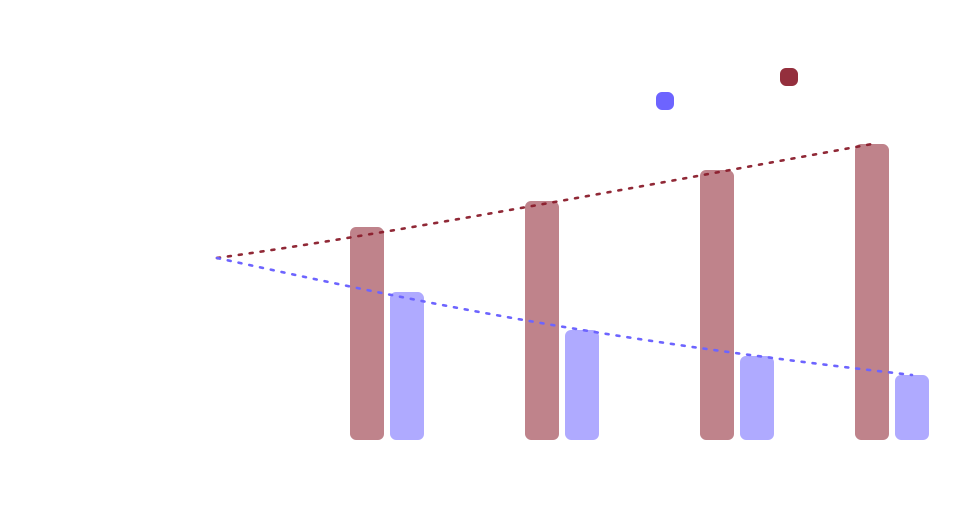
When readiness is weak, the organization loses coherence. Incoherence is expensive. It multiplies operational damage and creates secondary damage through scrutiny and forced controls.
- Extended impact. Containment starts late, the blast radius grows.
- Unsafe remediation. Fixes land under pressure and create downstream failures.
- Bureaucratic drag. The safe fix is slow, the risky fix ships fast.
- Scrutiny cost. Without evidence, you cannot defend the timeline or the decisions under scrutiny.
- Recurring cost. The same failures keep returning and charging the business.
- Leadership exposure. If the record is not defensible, leadership inherits the risk.
What to establish in production
This note is not a best practices list. It is the minimum operating posture that keeps incidents from turning into leadership risk. Most teams have tools and fragments of process. Few have a chain that holds when pressure hits.
If you only do one thing, make four elements explicit and practiced: authority, escalation, fix guardrails, and evidence. Not as a document. As a rule people can execute at 2 a.m. on a Saturday, under pressure.
Good readiness is boring. Clear rules. Repeatable action. A record you can defend.
Request a readiness review
If this note felt familiar, you do not need more runbook advice. You need a senior-led review of your production readiness posture: authority, escalation paths, response flow, fix guardrails, evidence, and learning cadence.
We can help you with a concise written view of where response stalls, where unsafe change can enter, why recurrence is likely happening, which tools or processes are better to use in your context, and what must be made explicit so the next incident is controlled and defensible.
Where does authority collapse in the first hour � and who should own it?
Are escalation triggers explicit, practiced, and reachable during impact?
Where can unsafe change enter the blast radius, and what guardrail is missing?
Can you produce a defensible evidence record without reconstruction � and who owns updating it?
Why is the same failure mode returning � and what learning cadence would stop it?